
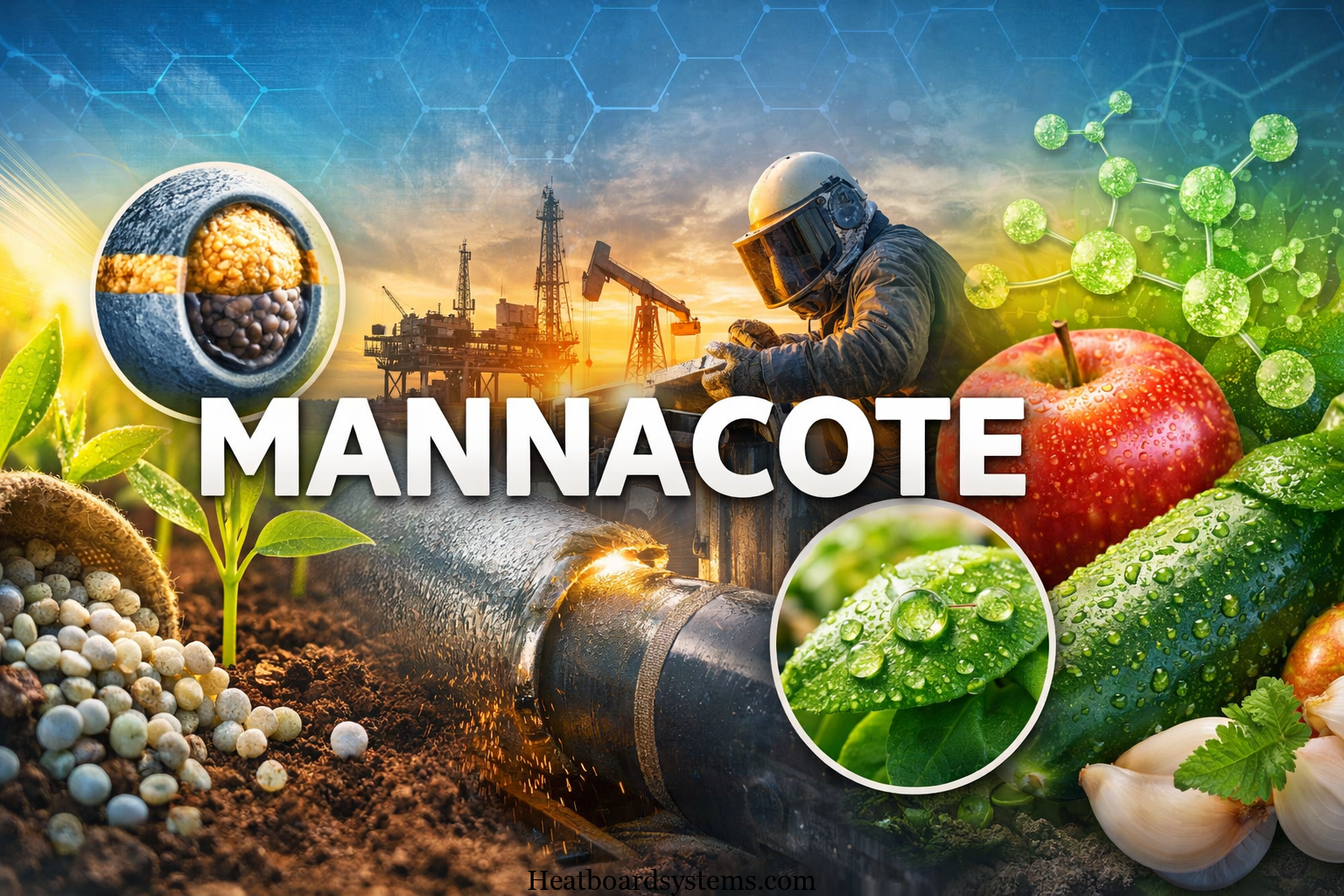
Introduction to Mannacote
In the modern era of technological innovation and sustainable development, advanced materials and protective technologies are becoming essential across many industries. One term that has started appearing in online discussions, research articles, and industry blogs is Mannacote. Although the term may initially seem unfamiliar, it represents an important concept related to coating technologies designed to enhance performance, durability, and efficiency of materials and products.
Mannacote is not limited to one specific product or industry. Instead, it describes a broad idea associated with protective or functional coatings that help regulate how substances interact with their environment. These coatings can improve durability, control chemical release, reduce environmental impact, and protect materials from external damage.
As industries move toward smarter and more sustainable technologies, coating systems similar to Mannacote are gaining increased attention. From agriculture and infrastructure to environmental engineering and food preservation, these coatings play a vital role in improving efficiency and reducing waste.
What is Mannacote
Mannacote can be understood as a coating system or coating-based technology designed to provide protection, regulate release processes, or improve the performance of materials. The core concept involves applying a specially engineered layer onto a product or surface in order to control how it behaves in different environmental conditions.
This coating layer acts as a protective or functional barrier between the material and its surroundings. Depending on its design, the coating can perform various functions such as preventing corrosion, controlling nutrient release, protecting crops, or improving structural durability.
The name Mannacote is often used in discussions involving advanced coating technologies that combine chemistry, material science, and environmental engineering. Instead of relying solely on the properties of raw materials, these systems enhance performance by modifying the surface of a product through specialized coatings.
This approach has become increasingly common in modern engineering because surface treatments can dramatically improve performance without requiring entirely new materials. As a result, coating technologies like those associated with Mannacote are now widely used across many sectors.
The Science Behind Coating Technologies
To understand the significance of Mannacote, it is helpful to examine the science behind coating systems. Coatings are thin layers of material applied to surfaces in order to alter their properties. These layers can be made from polymers, resins, ceramics, or biodegradable compounds depending on their intended use.
One of the key functions of coatings is protection. Materials exposed to air, moisture, chemicals, or temperature changes can degrade over time. By adding a protective coating, engineers can create a barrier that prevents these environmental factors from damaging the underlying surface.
Another important function of coatings is controlled interaction. Some coatings are designed to regulate how substances move through them. For example, certain coatings allow moisture or nutrients to pass through slowly over time rather than immediately.
This ability to control interactions between materials and their environment is what makes coating technologies extremely valuable. Mannacote-style coatings take advantage of this principle by creating surfaces that behave in a controlled and predictable manner.
Mannacote in Agricultural Innovation
One of the most significant applications of Mannacote appears in agriculture, particularly in the development of advanced fertilizer systems. Agriculture relies heavily on fertilizers to provide crops with essential nutrients such as nitrogen, phosphorus, and potassium. However, traditional fertilizers often dissolve quickly when applied to soil.
Rapid dissolution can create several problems. Nutrients may be lost through water runoff, evaporation, or soil leaching before plants are able to absorb them. This not only reduces fertilizer efficiency but also contributes to environmental pollution in nearby water systems.
Coated fertilizer technologies address this challenge by surrounding fertilizer particles with a protective layer. In systems associated with Mannacote, this coating regulates the release of nutrients over time. Instead of dissolving instantly, nutrients are gradually released as the coating interacts with soil moisture and temperature.
This controlled release process allows plants to absorb nutrients more efficiently throughout their growth cycle. Farmers can therefore apply fertilizer less frequently while achieving improved crop performance.
In addition to increasing agricultural productivity, coated fertilizer technologies help reduce environmental impact. By slowing nutrient release, these coatings minimize the risk of excess fertilizer entering rivers, lakes, or groundwater. This makes Mannacote-style coatings particularly valuable in sustainable farming systems.
Industrial Applications of Mannacote Coatings
Beyond agriculture, Mannacote is also associated with protective coatings used in industrial and construction environments. Materials used in infrastructure and machinery are constantly exposed to harsh environmental conditions such as moisture, chemicals, heat, and physical wear.
Without protection, these conditions can cause gradual damage to surfaces. Metal components may rust, concrete structures may crack, and machinery parts may deteriorate over time. Protective coatings help prevent these problems by forming a barrier between materials and their surroundings.
In many industrial contexts, Mannacote refers to coating systems designed to improve durability and resistance. These coatings can be applied to metals, concrete surfaces, industrial equipment, and transportation infrastructure.
For example, metal surfaces used in marine environments are particularly vulnerable to corrosion due to constant exposure to saltwater. Applying specialized coatings can significantly extend the lifespan of these materials by preventing rust formation.
Similarly, industrial coatings applied to machinery can protect against chemical exposure and mechanical abrasion. By reducing wear and tear, these coatings help maintain equipment efficiency and reduce maintenance costs.
Sustainable and Eco-Friendly Coating Technologies
Another important area connected to Mannacote involves environmentally friendly coating innovations. As industries become more aware of environmental challenges, there is increasing demand for sustainable materials that minimize waste and pollution.
Eco-friendly coating technologies aim to achieve these goals by using biodegradable or renewable materials. These coatings can be applied in agriculture, food systems, and packaging industries to improve sustainability.
For instance, biodegradable coatings can be applied to agricultural seeds to protect them during early growth stages. These coatings may include nutrients or natural protective compounds that improve germination rates and plant health.
Similarly, food preservation technologies sometimes rely on edible or biodegradable coatings applied to fruits and vegetables. These coatings create a thin protective layer that slows moisture loss and protects against microbial contamination.
By extending the shelf life of food products, such coatings help reduce food waste and improve supply chain efficiency. Innovations in sustainable coating technologies therefore demonstrate how concepts associated with Mannacote can contribute to global environmental solutions.
Mannacote and Surface Engineering
The concept of Mannacote also reflects the growing importance of surface engineering in modern material science. Surface engineering focuses on modifying the outer layer of materials in order to improve their performance without changing the entire structure.
This approach allows engineers to enhance specific properties such as hardness, corrosion resistance, chemical stability, or friction reduction. By applying specialized coatings, materials can be adapted for demanding applications in industries like aerospace, automotive engineering, and electronics.
Surface engineering techniques often involve advanced materials such as nano-coatings, polymer films, and composite layers. These technologies allow precise control over how surfaces behave under different conditions.
Mannacote-style coating systems can therefore be viewed as part of a broader movement toward advanced surface treatments. Instead of replacing existing materials, engineers enhance them by applying innovative coatings that improve their functionality.
Why the Meaning of Mannacote Varies Online
One reason the term Mannacote can appear confusing in online searches is that it does not refer to a single universal product or technology. Instead, it functions as a flexible term that can describe several types of coating systems depending on the industry.
Agricultural blogs may use the word when discussing coated fertilizers, while industrial articles may use it to describe protective surface treatments. Sustainability-focused discussions may refer to biodegradable coatings for crops or food products.
Although these interpretations differ in their specific applications, they share the same underlying concept of using coatings to control how materials interact with their environment. Recognizing this common principle helps clarify why the term appears across multiple fields.
Future Innovations Related to Mannacote
As research in material science continues to advance, coating technologies associated with Mannacote are expected to become even more sophisticated. Scientists are currently exploring coatings that can respond dynamically to environmental changes.
For example, temperature-sensitive coatings could adjust nutrient release rates in agricultural systems depending on seasonal conditions. Self-healing coatings could repair minor damage automatically, reducing the need for maintenance in industrial equipment.
Another promising area involves antimicrobial coatings that prevent bacterial growth on surfaces in healthcare environments. These coatings could play an important role in improving hygiene and reducing infection risks.
Advances in nanotechnology may also lead to ultra-thin coatings capable of providing exceptional protection while remaining nearly invisible. Such innovations demonstrate how coating technologies will continue to evolve as industries seek more efficient and sustainable solutions.
Conclusion
Mannacote represents a concept connected to advanced coating technologies designed to enhance durability, regulate interactions, and improve performance across many industries. While the term may appear in different contexts, its core idea remains consistent: applying a specialized coating layer to improve how materials function in real-world environments.
In agriculture, Mannacote-style coatings help regulate nutrient release and support sustainable farming practices. In industrial environments, protective coatings extend the lifespan of machinery, infrastructure, and materials. Sustainable innovations also demonstrate how coating technologies can reduce waste and improve environmental responsibility.
As scientific research continues to explore new materials and surface engineering techniques, coating technologies like Mannacote are likely to become even more important. By improving efficiency, protecting valuable resources, and supporting sustainable development, these advanced coatings represent a powerful tool in the future of modern technology.