
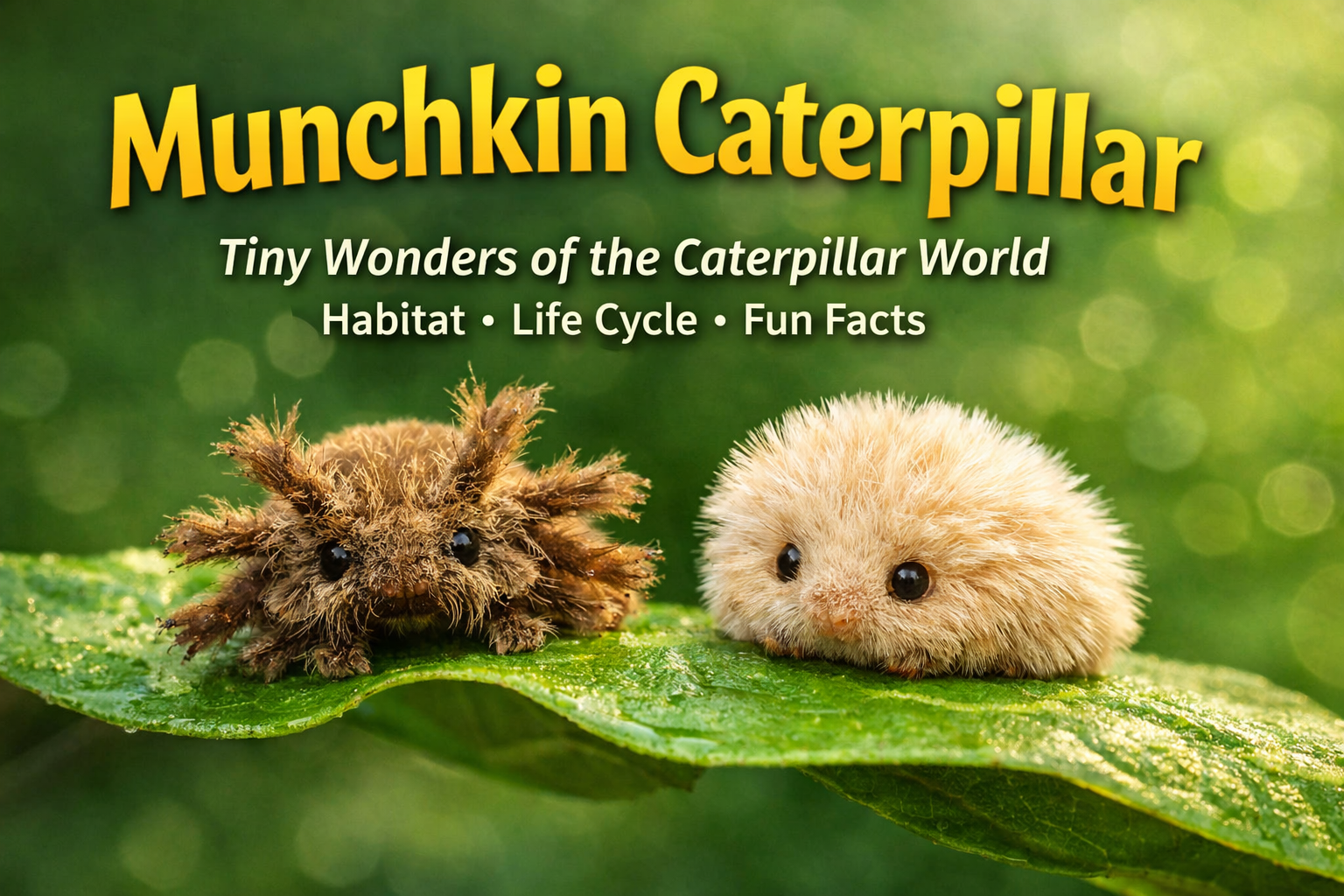
Introduction to the Munchkin Caterpillar
Nature is filled with remarkable insects that capture human curiosity, and caterpillars are among the most fascinating. One phrase that has recently gained attention in online searches and nature discussions is the munchkin caterpillar. This term often appears in blogs, wildlife photography, and educational articles where people describe tiny or unusually cute caterpillars discovered in gardens, forests, or natural environments.
Although the phrase sounds like the name of a specific insect species, the munchkin caterpillar is not an official scientific classification used by entomologists. Instead, it is an informal nickname used by nature observers to describe caterpillars that appear particularly small, rounded, or adorable. The word “munchkin” itself is commonly used in English to refer to something miniature or charmingly tiny, and when applied to caterpillars it highlights their compact size and distinctive appearance.
The growing popularity of this term reflects the increasing public interest in insects and wildlife. As more people explore nature photography and environmental awareness, unusual caterpillars often become popular subjects of online curiosity. Understanding the munchkin caterpillar provides insight into the incredible diversity of insects and the complex life cycles that transform these small larvae into butterflies or moths.
Understanding the Meaning of Munchkin Caterpillar
The phrase munchkin caterpillar is primarily descriptive rather than scientific. It is used by people who encounter small or unusually shaped caterpillars and want to describe them in a simple and memorable way. Because many caterpillars can appear short, chubby, or fluffy, the nickname can apply to several different species.
In everyday language, the term “munchkin” often describes something that is tiny, playful, or cute. When applied to caterpillars, it emphasizes the miniature and sometimes cartoon-like appearance of certain larvae. Some caterpillars appear rounder or more compact than typical species, which makes them resemble tiny creatures rather than elongated insects.
The use of this phrase became more common through internet discussions, blogs, and wildlife photography communities. When people encounter a small or unusual caterpillar, they often search online using descriptive words instead of scientific names. Over time, this behavior helped popularize the phrase “munchkin caterpillar” as a recognizable keyword.
Physical Characteristics of the Munchkin Caterpillar
One of the reasons the munchkin caterpillar attracts attention is its distinctive physical appearance. Many caterpillars described with this nickname share several visual features that make them stand out among other insect larvae.
Most munchkin-like caterpillars are relatively small compared to typical garden caterpillars. Their bodies may appear shorter and thicker, giving them a rounded or plump look. This compact body shape often makes them appear more like tiny creatures than traditional caterpillars.
Another characteristic commonly associated with munchkin caterpillars is their unusual texture or covering. Some species have soft hair, fuzzy spines, or velvety surfaces that create a fluffy appearance. These features may make the caterpillar look harmless or adorable, although they sometimes serve as protective defenses against predators.
Coloration can also vary widely among these caterpillars. Some are bright green to blend with leaves, while others display vibrant patterns such as yellow, orange, or brown. These colors can serve as camouflage or warning signals depending on the species.
In some cases, the body shape itself may appear unusual. Certain caterpillars develop small lobes, tentacle-like extensions, or other structures that make them look different from the smooth cylindrical shape commonly associated with caterpillars.
Habitat and Natural Environment
Caterpillars described as munchkin caterpillars can be found in many different habitats around the world. Because they are the larval stage of butterflies and moths, their presence depends largely on the availability of suitable host plants.
These caterpillars are often found in forests, gardens, parks, and agricultural areas where vegetation is abundant. Leaves provide their primary food source, so they usually remain close to the plants they feed on. Some species prefer trees such as oak, maple, or apple, while others thrive on shrubs or herbaceous plants.
In temperate regions, caterpillars typically appear during spring and summer when plant growth is abundant. Warmer climates may support caterpillar activity for longer periods throughout the year.
Because of their small size and effective camouflage, munchkin caterpillars can be difficult to spot. Many people discover them accidentally while gardening, walking through forests, or examining leaves closely.
Despite their tiny appearance, these caterpillars are an essential part of natural ecosystems. They contribute to plant cycles and provide food for many animals including birds, reptiles, and other insects.
Life Cycle of a Munchkin Caterpillar
The munchkin caterpillar represents only one stage in the remarkable life cycle of butterflies and moths. Like all members of the insect order Lepidoptera, these organisms undergo a process known as complete metamorphosis.
The life cycle begins when an adult butterfly or moth lays eggs on suitable plants. These eggs are extremely small and often hidden on the underside of leaves. After a short period, depending on temperature and environmental conditions, the eggs hatch into tiny caterpillars.
Once hatched, the caterpillar enters the larval stage, which is primarily focused on feeding and growth. During this time the caterpillar consumes plant material almost continuously. This intense feeding allows it to store the energy required for the next stage of development.
As the caterpillar grows, it periodically sheds its outer skin in a process known as molting. Each molt allows the insect to expand in size and develop new features. Eventually the caterpillar reaches its full growth and prepares for transformation.
The next stage is the pupal stage, during which the caterpillar forms a chrysalis or cocoon. Inside this protective structure, the insect undergoes a dramatic transformation as its body reorganizes into the adult form of a butterfly or moth.
After this transformation is complete, the adult insect emerges from the chrysalis and begins its reproductive life cycle.
Behavior and Feeding Patterns
The primary activity of any caterpillar, including those described as munchkin caterpillars, is feeding. Their bodies are designed to consume large amounts of plant material in order to support rapid growth.
Most caterpillars feed on leaves, though some species may also eat flowers, fruits, or stems. Their strong jaws allow them to chew through plant tissues efficiently. This feeding behavior plays an important role in plant ecology by influencing vegetation growth and nutrient cycles.
Because caterpillars are vulnerable to predators, many species have evolved clever strategies to avoid detection. Some rely on camouflage, blending into leaves and branches so effectively that they become nearly invisible. Others display bright colors or patterns that signal potential toxicity to predators.
Some caterpillars also possess defensive hairs or spines that discourage animals from attacking them. These structures may cause irritation or mild pain if touched, providing an additional layer of protection.
Why the Munchkin Caterpillar Is Popular Online
The popularity of the munchkin caterpillar in online searches is largely driven by curiosity and fascination with unusual insects. When people encounter a small or oddly shaped caterpillar, they often search the internet using descriptive phrases rather than scientific names.
Social media has also played a significant role in spreading awareness of these tiny creatures. Photographs of unusual caterpillars often go viral because of their strange or adorable appearance. Macro photography in particular reveals details that make caterpillars appear even more unique and captivating.
Nature bloggers and educational websites frequently write about these insects to help readers identify the caterpillars they find in their gardens or local parks. As a result, the phrase munchkin caterpillar has become a recognizable keyword associated with small or cute caterpillar species.
This interest reflects a broader trend of people reconnecting with nature and learning more about the insects that live in their environments.
Ecological Importance of Caterpillars
Although they are small, caterpillars play a crucial role in maintaining ecological balance. Their feeding activities help regulate plant growth and contribute to nutrient recycling in ecosystems.
Caterpillars are also a vital food source for many animals. Birds rely heavily on caterpillars to feed their young, especially during nesting seasons. Other predators such as spiders, reptiles, and certain insects also depend on caterpillars as part of their diet.
In addition to supporting other species, caterpillars eventually transform into butterflies or moths, many of which are important pollinators. These adult insects help plants reproduce by transferring pollen between flowers.
The presence of healthy caterpillar populations often indicates a balanced and thriving ecosystem. For this reason, scientists and conservationists pay close attention to changes in caterpillar populations when studying environmental health.
Safety and Human Interaction
While many caterpillars look harmless, it is important to approach them with caution. Some species possess stinging hairs or toxic spines that can cause skin irritation or mild allergic reactions.
These defensive features are designed to protect caterpillars from predators but can also affect humans if the insects are handled improperly. For this reason, it is best to observe caterpillars without touching them.
Nature observation should always be conducted responsibly. Respecting wildlife and avoiding unnecessary disturbance helps protect these insects and the ecosystems they inhabit.
Conclusion
The munchkin caterpillar is a charming example of how everyday observations can inspire curiosity about the natural world. Although the term is informal and not tied to a single scientific species, it effectively describes the tiny, compact, and often adorable caterpillars that people encounter in gardens and natural environments.
These small larvae represent an important stage in the life cycle of butterflies and moths. Their unique appearances, feeding behaviors, and ecological roles highlight the complexity of insect life and the interconnectedness of ecosystems.
By learning more about the munchkin caterpillar, people gain a deeper appreciation for the diversity of insects that share our environment. Even the smallest caterpillar can reveal fascinating insights into the wonders of nature.